

1. The 30-second answer
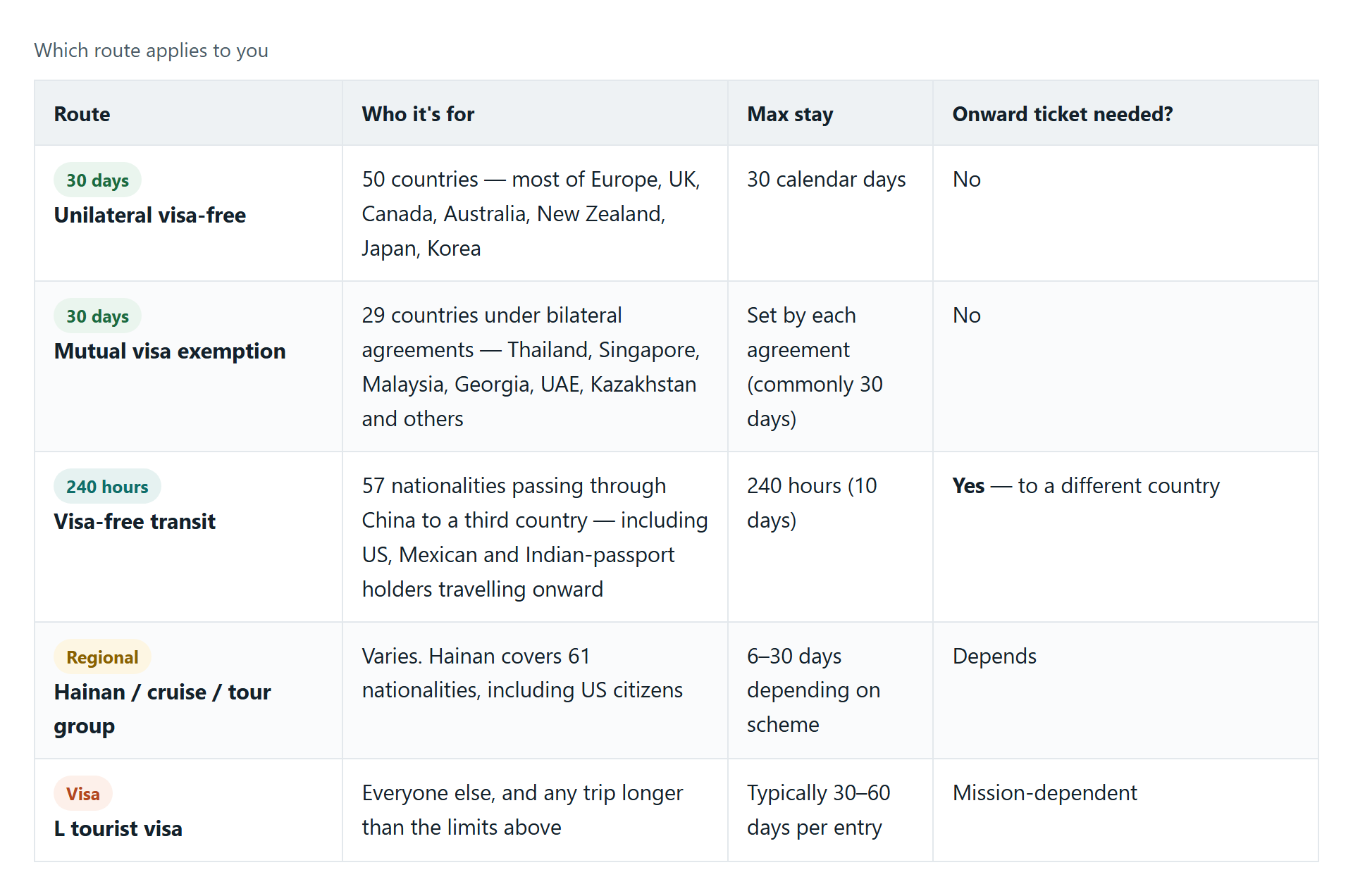
China runs five separate no-visa routes. Which one applies to you depends entirely on the passport you hold — and getting it wrong can mean being refused boarding before you even reach China.
2. Route 1 — 30-day visa-free entry
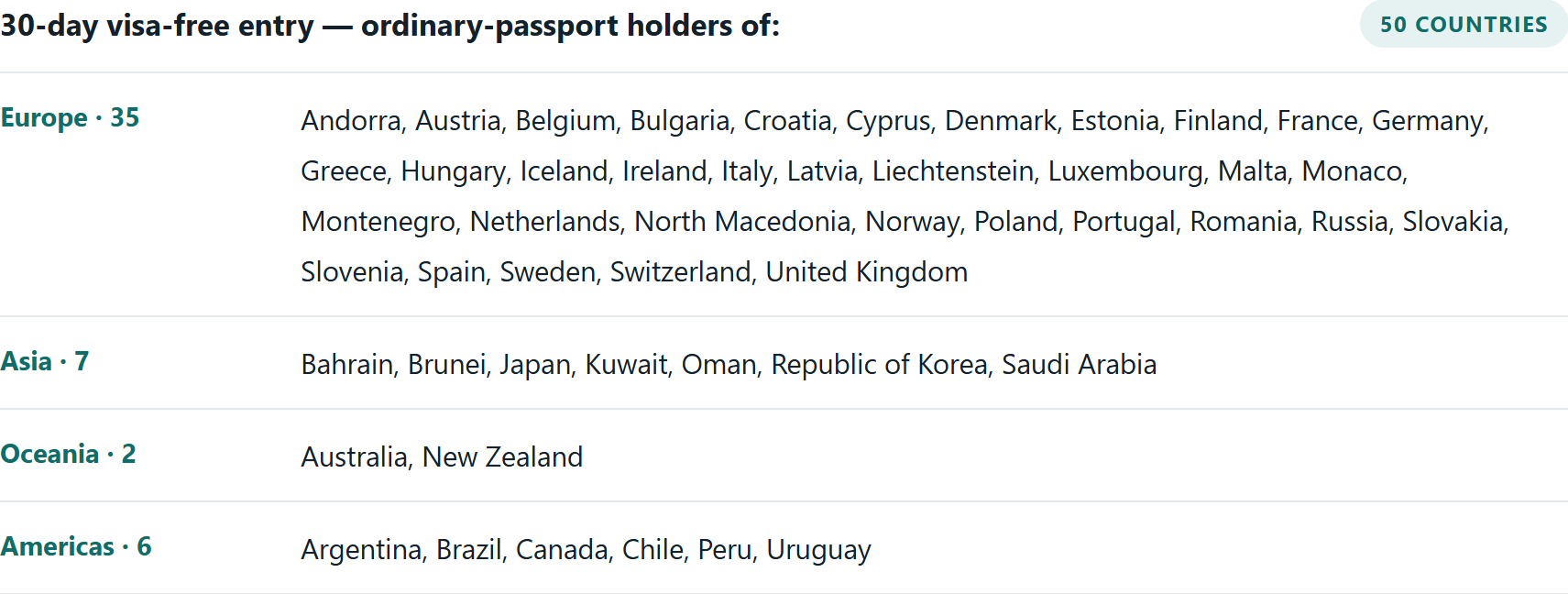
China decided unilaterally, with no reciprocity required, to admit ordinary-passport holders from 50 countries for up to 30 days. No application, no fee, no onward ticket.
3. Route 2 — Mutual visa exemption agreements
A separate, older track: China has signed two-way visa-waiver treaties with around 29 countries, so both sides drop the visa. At the border it behaves exactly like Route 1.
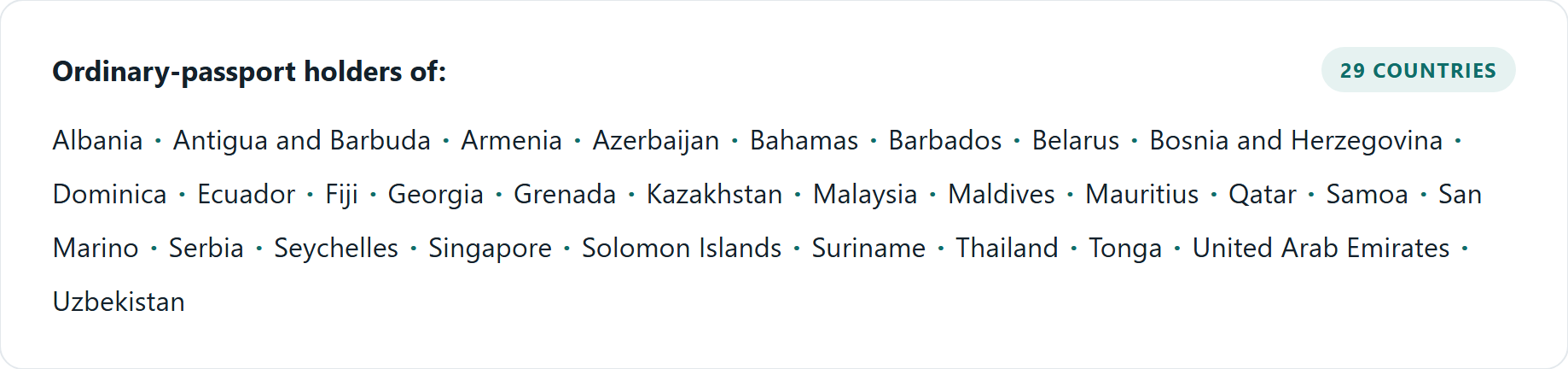
The permitted length of stay is set individually by each agreement and is not uniform — most are 30 days per entry, some are longer, and a few carry a rolling cap (for example, a 90-day ceiling within any 180-day period). Always confirm your specific country's figure on the Ministry of Foreign Affairs list of mutual visa exemption agreements before travelling. Malaysia's ordinary-passport waiver, for instance, took effect on 17 July 2025; several others came into force in 2024 and 2025.
Countries such as Singapore, Thailand, Malaysia, Brunei, the UAE and Qatar also appear on the unilateral list — where both apply, you simply use whichever gives you the better terms.
4. Route 3 — 240-hour (10-day) visa-free transit
This is the route that matters most for the nationalities still left off the lists above — above all the United States. It replaced the old 72-hour and 144-hour schemes on 17 December 2024, and now covers 57 countries.
How the mechanism works
You fly from Country A, through China, onward to a different Country C. You may break that journey in China for up to 240 hours — ten days. The onward ticket to that third country is mandatory, and it is checked both at the departure gate and at Chinese immigration.
You can check the 57 eligible countries here.
5. Route 4 — 24-hour transit
Available to all nationalities at every Chinese port open to foreign nationals. Hold a valid international travel document and a connecting ticket with a confirmed seat, travelling by air, sea or rail through China to a third country or region, and stay no more than 24 hours without leaving the restricted area of the port. If you need to leave the port area, you must apply to the border inspection authority at the port for a temporary entry permit.
6. Route 5 — Regional and group schemes
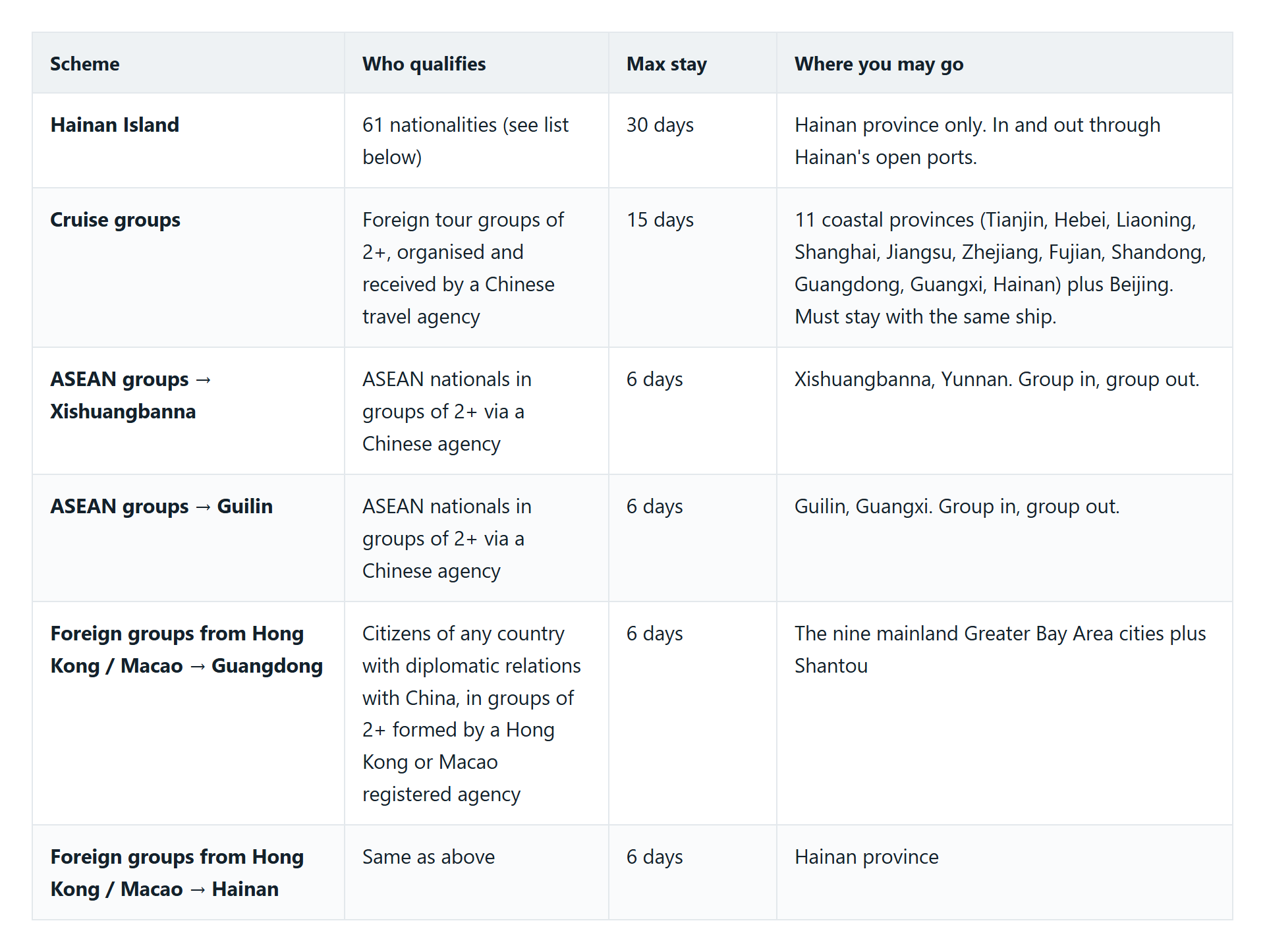
Six narrower schemes that let specific nationalities in without a visa, in exchange for staying inside a defined area.
7. If you need a visa: the L tourist visa, step by step
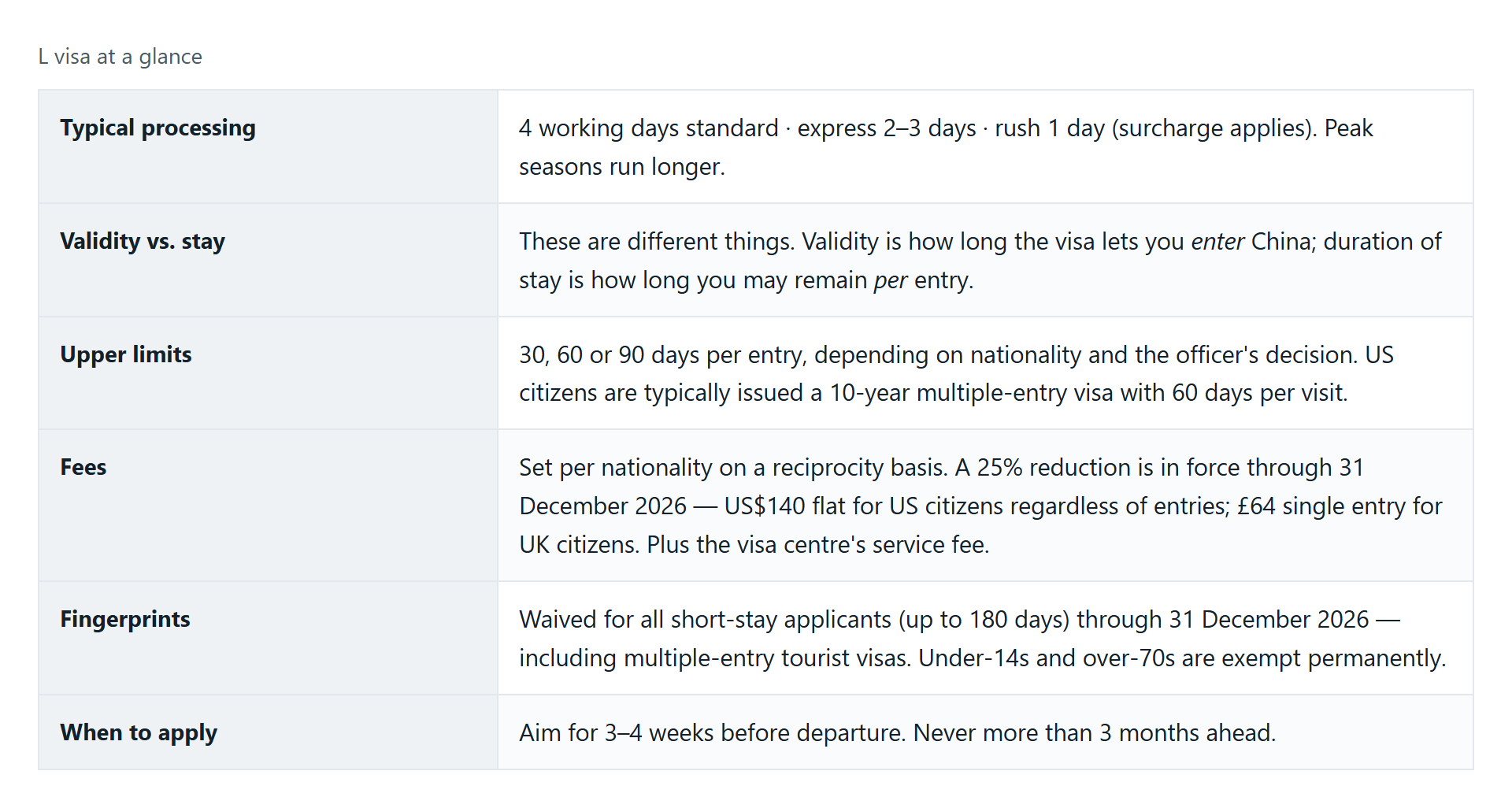
You can check the L tourist visa application step-by-step here.
8. Policy status and expiry dates
Read this part before you book anything for 2027.
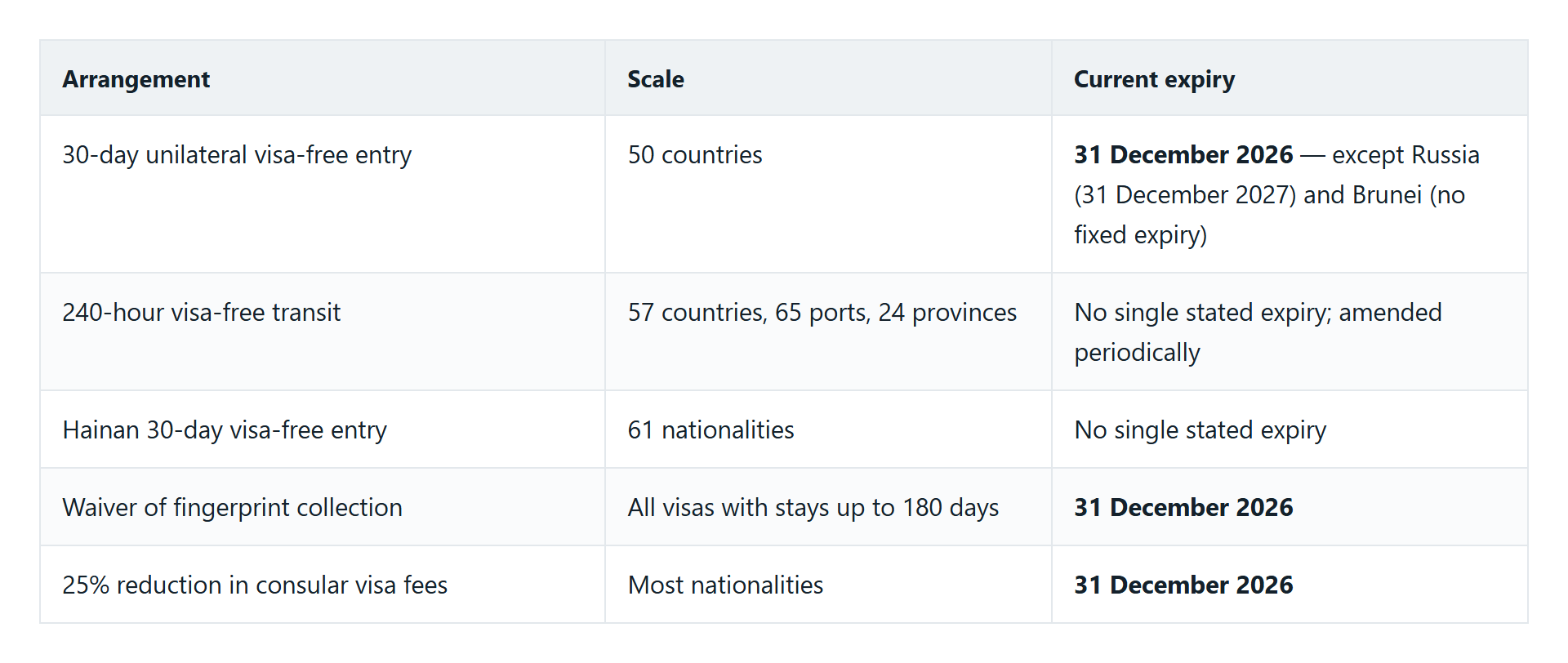 The one line to remember
The 30-day visa-free programme is still formally a trial. It has been extended repeatedly and widened over three years, but it is not permanent legislation. If you are planning a 2027 trip, re-check the dates before you commit to flights.
Source: China's National Immigration Administration